Endless Backcountry Playground @ Mount Baker, Washington
Snowfall Records, Summit Descents, and Endless Terrain
By Matt Schonwald; Cover Photo by Dine Miles
A Volcano with a Legacy
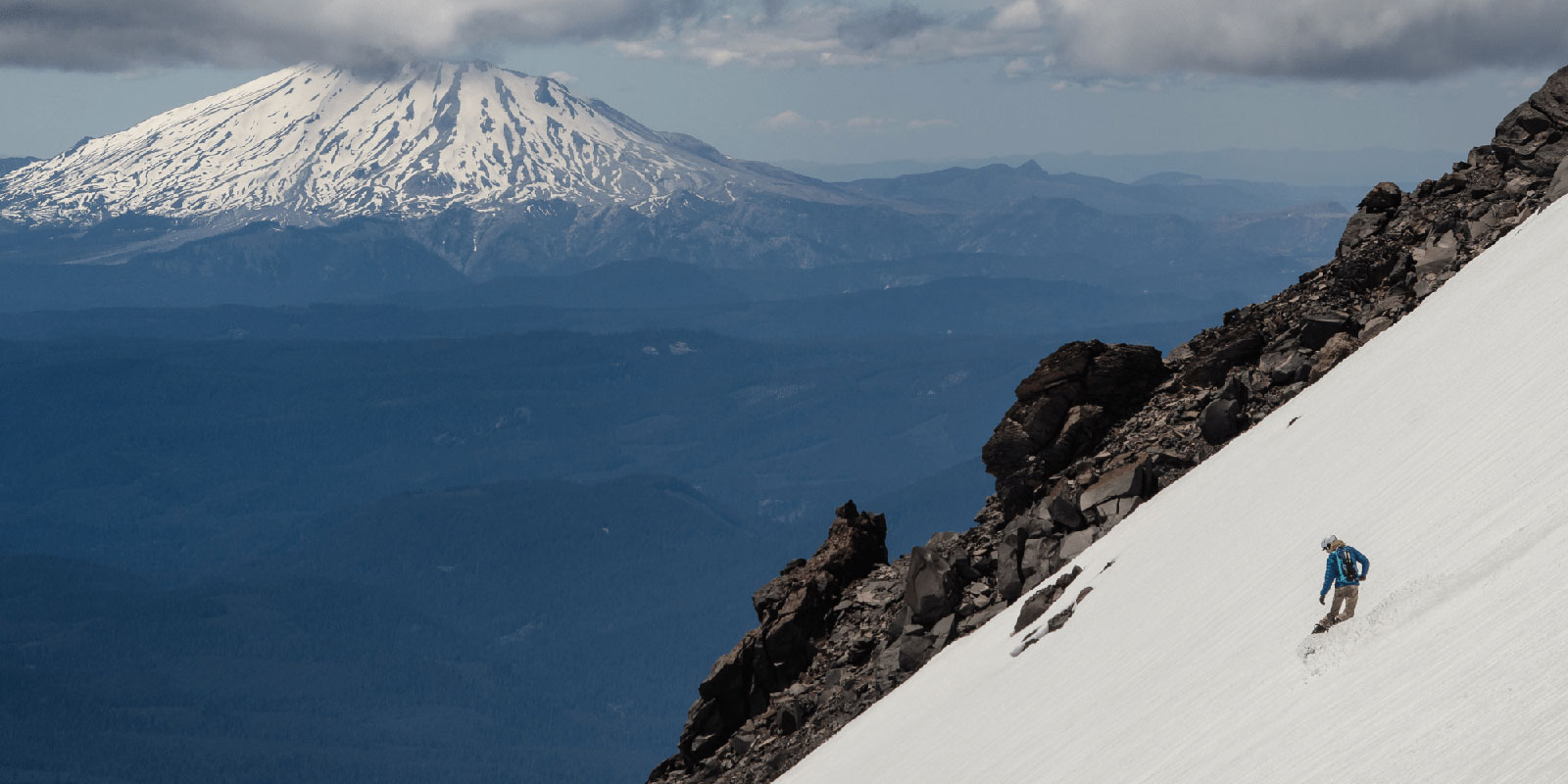
How does a 7,500-foot vertical ski descent from the summit of an active stratovolcano sound, with a view that includes Canada, the San Juan Islands, and the spiny heart of the North Cascades? If that kind of descent sounds like your idea of a perfect day, then Mount Baker is your kind of mountain.
Mount Baker, originally known as Komo Kulshan or “White Sentinel” by the Lummi Nation, was first recorded by Spanish explorer Gonzalo López de Haro in 1790. Two years later, British explorer George Vancouver navigated into the Salish Sea and named the volcano Mount Baker, honoring Lieutenant Joseph Baker who first spotted it on the horizon (USGS, HistoryLink).
Locals discovered the ski potential of the region as early as 1927, and the Mount Baker Ski Area opened in 1929. The area’s snowfall would eventually become legendary, setting records and attracting powder hounds from around the world.
Mt. Shuksan Demands Respect; Photo by Tobin Akehurst
First Tracks and Skiing History
Mount Baker has long been a proving ground for Northwest skiers. In 1933, Hans Otto Giese and Don Fraser of the Seattle Ski Club completed the first uninterrupted ski descent from Baker’s summit. They climbed the mountain in 6.5 hours and descended 6,750 feet in just 30 minutes. Considering the rudimentary gear of the day, such as wooden skis, leather boots, and minimal avalanche knowledge, their feat is even more impressive (Lowell Skoog’s History).
Ninety years later, that same sense of adventure fuels my own obsession. I make the drive up Highway 542 every weekend from November through April, chasing storms and seeking out the deepest turns in the Northwest. When the snow is right, few places can compare.
In the summer of 2022 a change to the Beacon Guidebook products and to the park itself happened at Hallett Peak in Chaos Canyon. A very large debris slide came free off the southside of Hallett Peak. Apartment complex size boulders slid as well as other varying size boulders and the existing snowfield. In some areas the debris ripped all the way down to the bedrock. No injuries or deaths occurred due to the slide. One of the unexpected by-products of the slide is the change in color of Lake Haiyaha from its typical clear alpine lake look to a sea-green from the “rock-flour” transported into the lake after the slide. Chaos Canyon past Lake Haiyaha is closed until further notice because there are still many active slide areas.
Plenty of terrain for all
Into the adventure zone
Thanks to Scott Schell for the Amazing photos!
Endless Terrain and North America's Deepest Pow
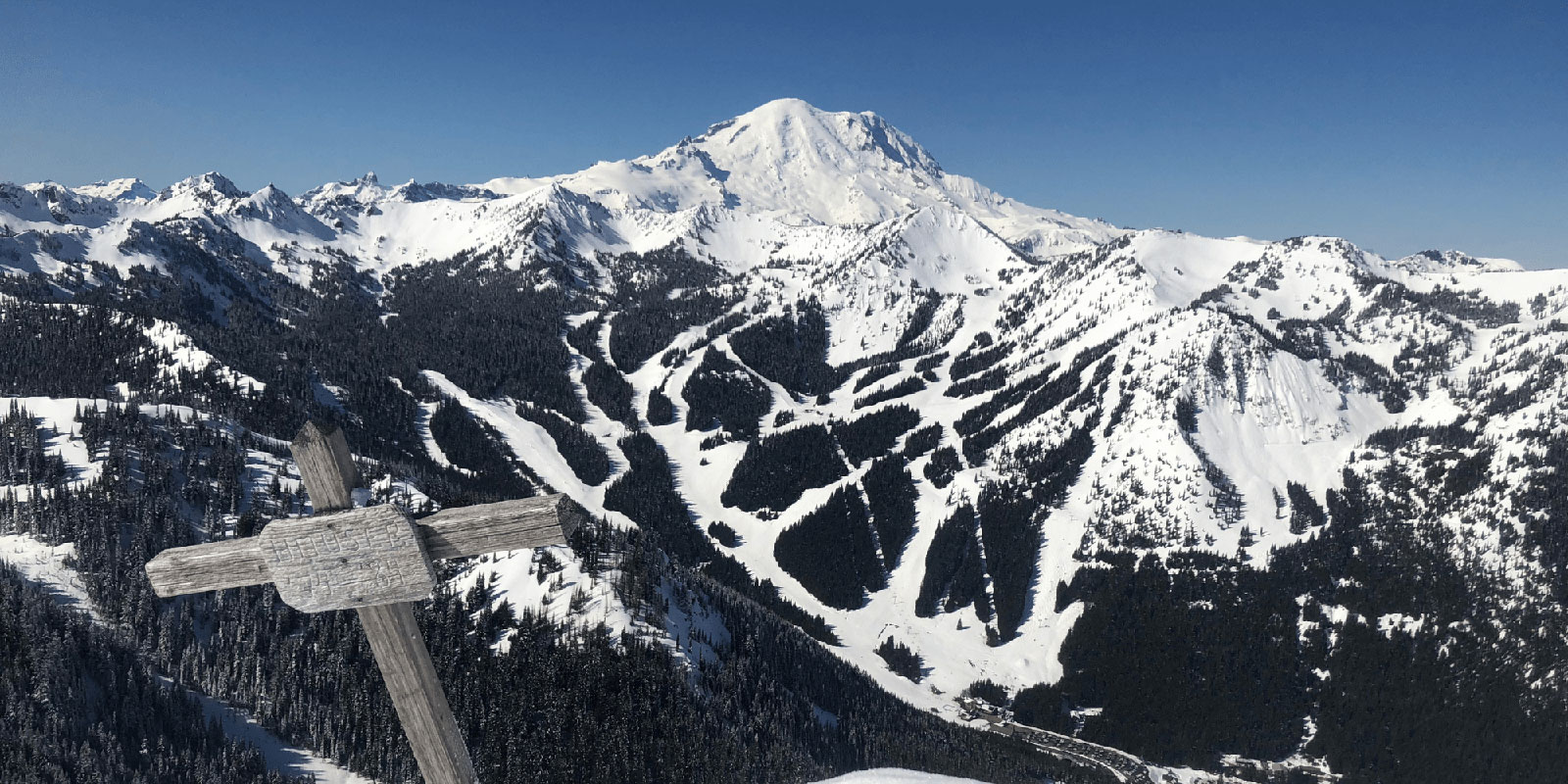
The Mount Baker backcountry stretches from the dramatic flanks of Mount Shuksan to the broad glaciers of Baker itself. This massive zone connects the ridgelines of Shuksan Arm to Ptarmigan Ridge and includes powder bowls, open glades, technical couloirs, and steep treed runs that hold snow deep into spring. Thanks to its location and elevation, Baker Ski Area consistently reports one of the deepest snowpacks in North America—averaging over 650 inches annually, with a record of 1,140 inches during the 1998–99 season (NOAA).
Many backcountry tours begin directly from the ski area boundary, making it easy to explore new zones lap after lap. Whether you’re linking glacier runs or diving into tight trees after a storm, Baker rewards curiosity and persistence.
A lifetime of lines
Sources
Mount Baker Ski Area. Snowfall statistics. https://www.mtbaker.us/the-mountain/snowfall-statistics
Wikipedia contributors. (2024, July 29). Mount Baker. Wikipedia. https://en.wikipedia.org/wiki/Mount_Baker
Skoog, L. Mount Baker chronology. Alpenglow Ski History. https://alpenglow.org/ski-history/chronology/mt-baker-info.html