Backcountry Skiing Rainier, Adams and St. Helens @ Washington
Legendary spring skiing in the Washington Cascades
By Eric Schmidgall
The Making of the Cascades
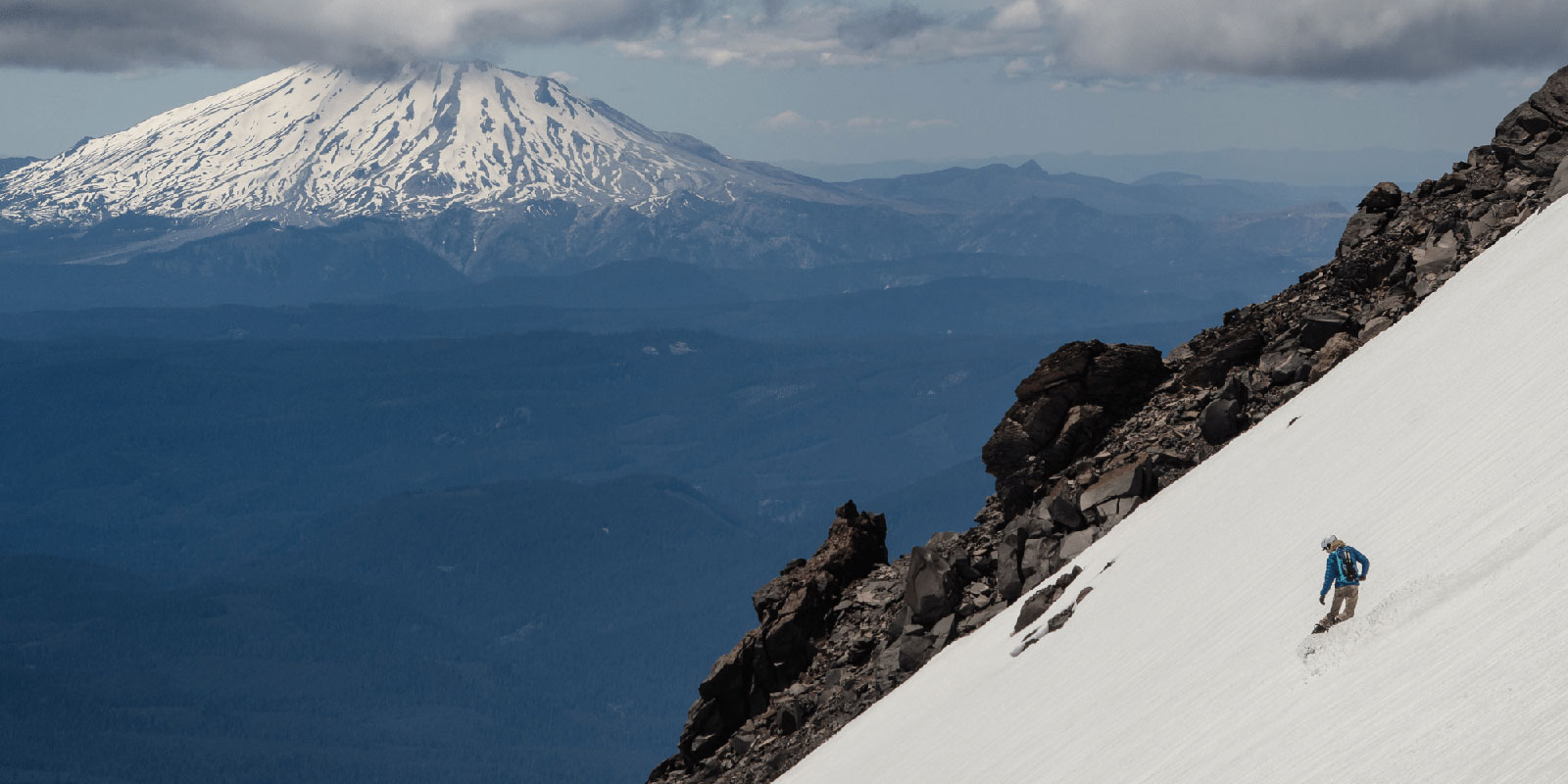
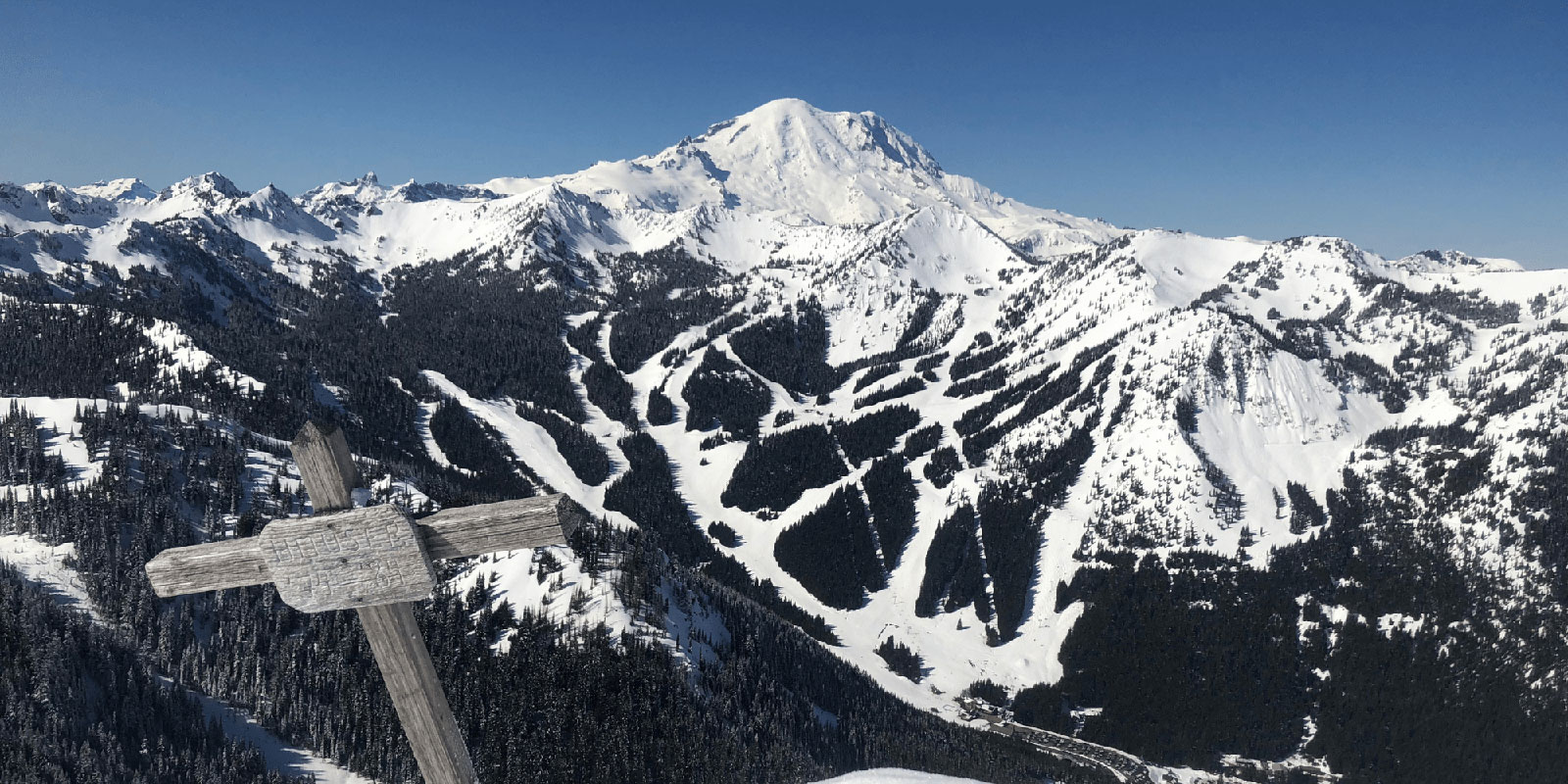
In the northwestern corner of the continental United States, the collision of two tectonic plates has created one of the most dramatic mountain chains on Earth: the Cascades. Stretching roughly fifteen hundred miles from northern California to British Columbia, the range is a line of fire and snow, where magma bubbling up from the Earth’s crust has created prominent volcanic peaks. The highest, largest, and most active volcanoes of this range all rise in Washington state—Mount Rainier, Mount Adams, and Mount St. Helens. Each is legendary, and each draws skiers from around the world who come for the deep snow, big vertical, and long spring corn cycles. Together they represent everything that defines Pacific Northwest skiing: big peaks, deep winters, and spring skiing unrivaled in the United States.
Skiing to the Sky on Rainier
A Legacy of Ski Mountaineering
Paradise on Mount Rainier set the tone for ski mountaineering in the Northwest. By the 1930s it was a winter hub, home to a ski race from Camp Muir to Paradise, featuring four thousand feet of vert at highway speeds. The National Park Service eventually shut it down after the war, but the Muir Snowfield stayed a year-round ski zone and remains the gateway to serious lines that spill off the summit in every direction.
Farther south, Mount Adams became the classic spring volcano tour. First climbed in 1854, it later hosted one of the earliest summit ski descents in the Cascades. The South Route and Southwest Chutes deliver long, rolling runs that seem to go on forever, while the north and west sides hold steeper, more committing routes that keep drawing ambitious skiers every May and June.
Mount St. Helens tells a different story. Before the 1980 eruption, the mountain’s slopes above Spirit Lake were a busy winter playground. The eruption erased that world and reshaped the mountain, but when it reopened as a National Volcanic Monument a few years later, a new ski scene took root. Today, spring climbers skin up Monitor Ridge or Worm Flows, tag the crater rim, and ski perfect corn snow back to the timberline.
Another spring day in the Cascades
Taking in the view
The Spirit of Spring Corn
Backcountry skiing on these three volcanoes is thriving, but they all demand preparation and respect. On Rainier, topping out at 14,410 feet, the big terrain that defines the mountain offers massive vertical and long glacier runs, but access is tightly managed and climbers must carry full avalanche gear and travel smart. St. Helens, a more approachable peak of 8,300 feet, sees heavy spring traffic, with short weather windows, firm snow above treeline, and big avalanche paths that require timing and caution. Adams soars to over 12,000 feet, but remains quieter and more remote than its sister peaks. A broad mountain where route-finding, fitness, and self-reliance matter as much as snow conditions, Adams is a must-ski destination for spring tourists.
Across all three, responsible travel is a requirement. Check avalanche forecasts, plan routes around permits and closures, and take care to leave no trace on fragile alpine ground. Tools like the Avalanche Terrain Exposure Scale (ATES) help riders choose terrain that matches their skill level by rating the seriousness of the slope, simple, challenging, or complex, based on much exposure it has to avalanche paths and terrain traps. The system pushes people to think less about the color of the forecast and more about the terrain beneath their feet.
These mountains reward good judgment and humility. With clear skies, solid snow, and smart decisions, they offer some of the best ski mountaineering in North America. But the margin for error is small. Know your plan, know your partners, and choose your terrain wisely.