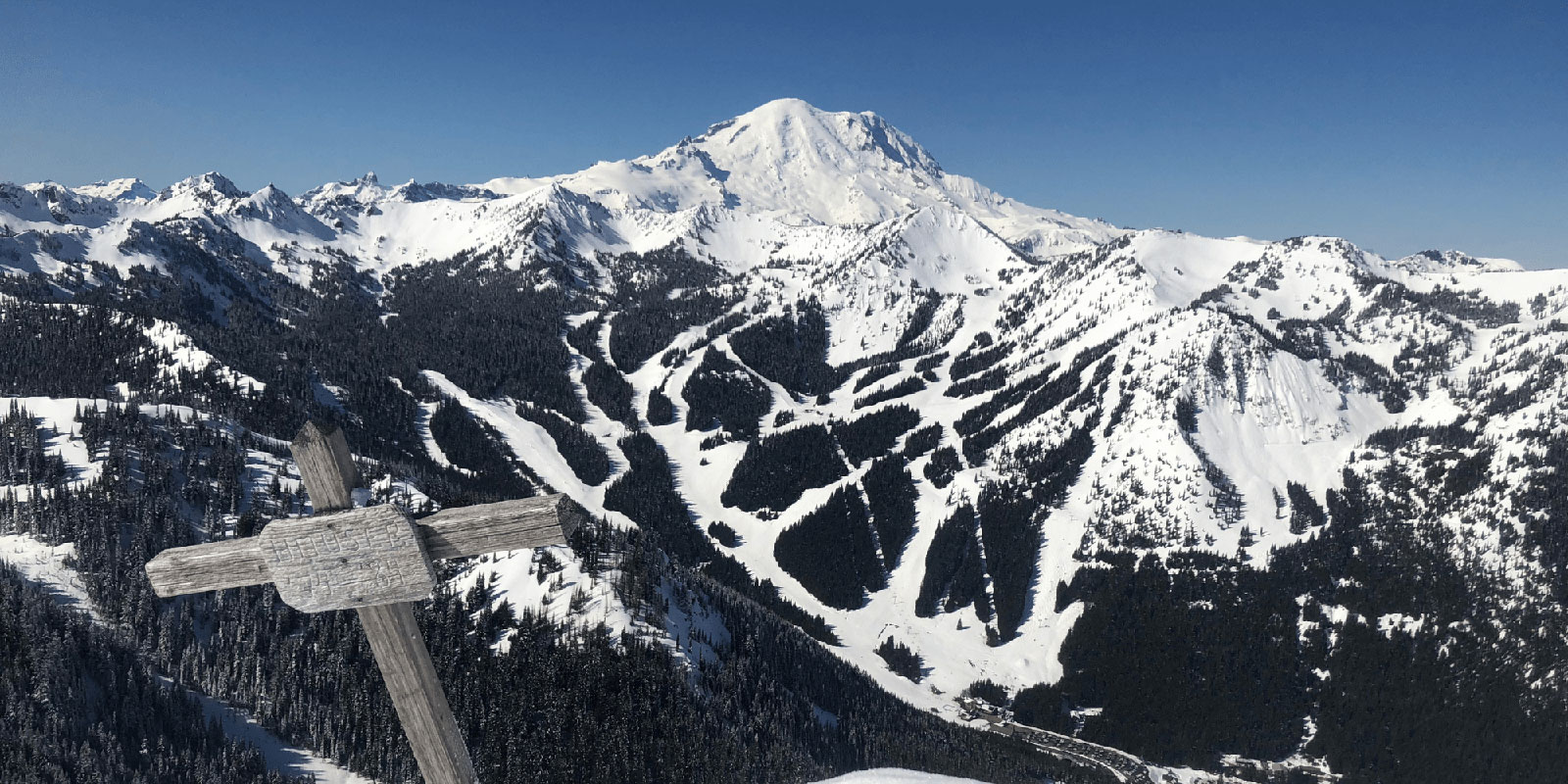
A Mountain With a Story to Tell
By Ashley Peterson
The Allure of Hood
Mount Hood, a peak visible for hundreds of miles, has captivated the attention of mountaineers and skiers for generations. Today, it is the most climbed snowy peak in the United States.
The first ascent of Mount Hood is slightly controversial. It is attributed to Henry Pittock on July 11, 1857, but there are claims of Thomas Dryer reaching the summit in 1854. Pittock’s climb is better documented and most think that Dryer was a few hundred feet short, so the actual first ascent may always be a mystery.
A direct quote from 1854 from an early mountaineering journal describes: “We give today an interesting account of the first ascent of Mount Hood, a snow-capped peak in Oregon, estimated to be 18,361 feet high, even more lofty than Mount Shasta, and heretofore unexplored.”
As we know today, the summit elevation of Mount Hood is only 11,249’, and is several thousand feet shy of Mount Shasta, but these early calculations show the impact and fascination that Mount Hood has held for generations.
Early climbers laid the foundation for the tremendous ski mountaineering to be found on Hood today. Most famously, in July of 1894, around 300 people set out to climb the peak and 155 men and 38 women were successful that day. These were the founders of the alpine club still active today known as Mazamas.
The Danger of Hood
Oregon’s tallest mountain has the reputation of being an “easy” mountain to climb. This has made the mountain very enticing to many beginner mountaineers, and people with even less experience. The mountain sees around 10,000 climbers a year, and 95% of those climbers come between April and July. Since recording began, more than 150 have died on the mountain, with 46 of those deaths taking place in the last 21 years. There is an entire Wikipedia page devoted to climbing accidents on Mount Hood.
Due to the inconsistent and ever-changing weather on the mountain, many climbers have been caught in rapidly developing storms. The temperature can drop rapidly and visibility can change in an instant, which has led to the two leading causes of death on the mountain being falls and hypothermia. A mountain with 11 active glaciers and deep crevasses that is prone to avalanches and erratic weather should not be underestimated. On average there are over 40 rescues off the mountain each year. This puts rescue teams in danger, and is financially taxing to people and agency funds.
Previously, you didn’t need a permit to climb or ski Mount Hood, you just needed to obtain a wilderness permit and fill out a form at the base asking about your party, plans, and equipment. But due to the increasing number of accidents and rescue attempts that occur on this peak, this rule has changed as of January, 2024. Currently, there is not be a limit on the number of permits sold, but anyone hoping to summit the mountain or climb above 9,000′ will need to pay a fee to obtain a permit . Always check the latest rules and policies before your trip.
Proper planning mitigates and lowers risk, so if you want to climb Hood, please be prepared. New to climbing, ski mountaineering or backcountry skiing? Go with a professional guide!
But Wait, There’s Skiing Too!
Skiing on Mount Hood started around the 1890s. In 1923 the first jump hill was built by the Jumping Norwegians, one of the many clubs formed around ski jumping at the time. Soon, locals wanted to try skiing but weren’t ready for jumping, so in 1927 the Summit Ski Area opened at Government Camp, making it the first ski area in the whole of the Pacific Northwest. In 1930, SkiBowl opened for business with rope tows, and is now the largest night ski area in the entire country.
As skiing took off, expansion followed quickly. Lodges for overnight stays, chairlifts, a ski patrol, and famous racers are all pieces of the puzzle that make skiing on Hood what it is today. Mount Hood now houses six ski resorts; Timberline Lodge, Mountain Hood Meadows, Mount Hood Ski Bowl, Cooper Spur, Snow Bunny and Summit Ski Area.
The first summit ski descent happened in the early 1930s, but backcountry skiing on Hood really hit the scene on March 1st, 1971 when a 34-year-old Swiss man by the name of Sylvain Saudan sent the cliffy, icy, wind-scoured Newton Clark headwall on the east side. Instead of climbing the mountain, he actually took a helicopter to the top because he’d had weeks of bad weather and his time was running out.
At one point on the descent, he skied into the wrong chute, one that ended in a cliff. It took him about half an hour to get out of that sketchy situation before making it to where he needed to be. From there, he was able to ski down to Meadows safely and claim his spot in history as the first person to ski Mount Hood. Saudan was also the first person to ski Denali, the Eiger via the west flank, and the first to ski down an 8,000-meter peak (which he also climbed without oxygen).
Today, you don’t have to be as extreme as the first ski pioneers on Mount Hood to enjoy the mountain. We see a natural crossover between skiers and mountaineers since what goes up, must come down. You see it on Mount Hood frequently, and you can see it more clearly in our guidebook as it helps you plan your next trip to the summit and back.
If you aren’t ready for big time ski-mountaineering, have no fear! Our book includes many “Simple” (ATES 1) and “Challenging” (ATES 2) sectors like Tom Dick and Harry Mountain, Bennett Pass, and Palmer, which offer fantastic introductory ski lines and tours. Learn more about the ATES system HERE.
Whatever the season and wherever your day takes you on Mount Hood, you will not be disappointed.
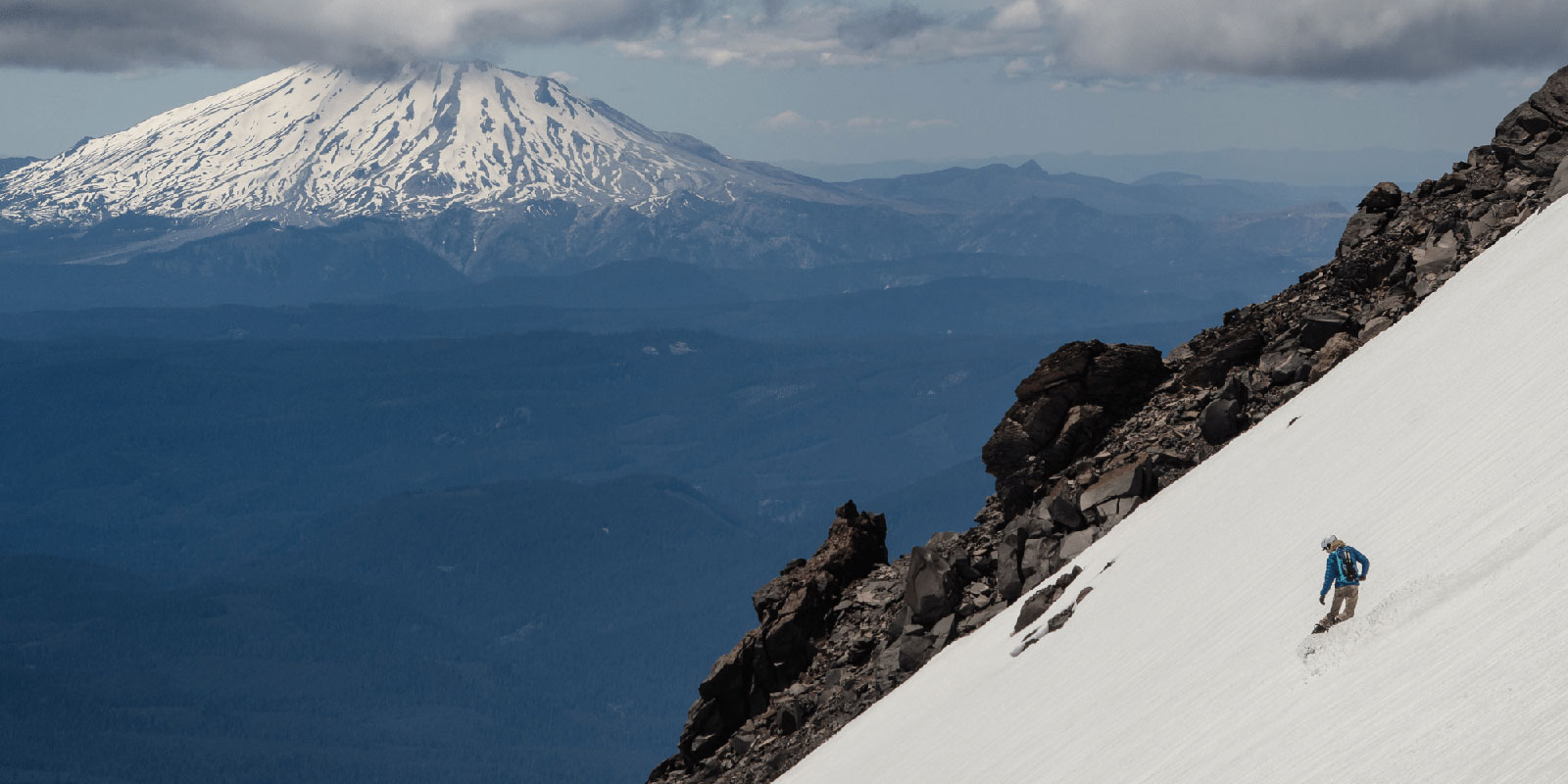
Get the Forecast, Get the Gear, Get a Guide!
WORKS CITED
Dowden, Ian. “Mt. Hood: Navigating the Challenges of Oregon’s Deadliest Peak.” CS Instant Coffee, CS Instant Coffee, 26 Sept. 2023, csinstant.coffee/coffee-notes/mt-hood-the-deadliest-mountain-in-oregon#:~:text=Jeff%20Garmire-,Mt.,deadliest%20mountains%20in%20the%20Cascades.
Flaccus, Gillian. “Death on Mount Hood Renews Debate: Should Climbers Have Permits?” The Seattle Times, The Seattle Times Company, 17 Feb. 2018, www.seattletimes.com/seattle-news/latest-death-on-mount-hood-renews-debate-should-climbers-have-permits/#:~:text=Mor.
“Mount Hood Skiing History and the Mt. Hood Museum.” Mount Hood Museum, mthoodmuseum.org/mount-hood-skiing-history-and-the-mt-hood-museum/. Accessed 24 Oct. 2023.
Topinka, Lyn. “First Ascent of Mount Hood, Oregon August 8, 1854.” Cascades Volcano Observatory, History – First Ascent of Mount Hood, Oregon August 8, 1854, volcanoes.usgs.gov/observatories/cvo/Historical/first_ascent_hood_1854.shtml. Accessed 24 Oct. 2023.